
From Steam to Hydrogen: India Opens a New Chapter in Railway History
Abhishek Byahut
Jind, Haryana
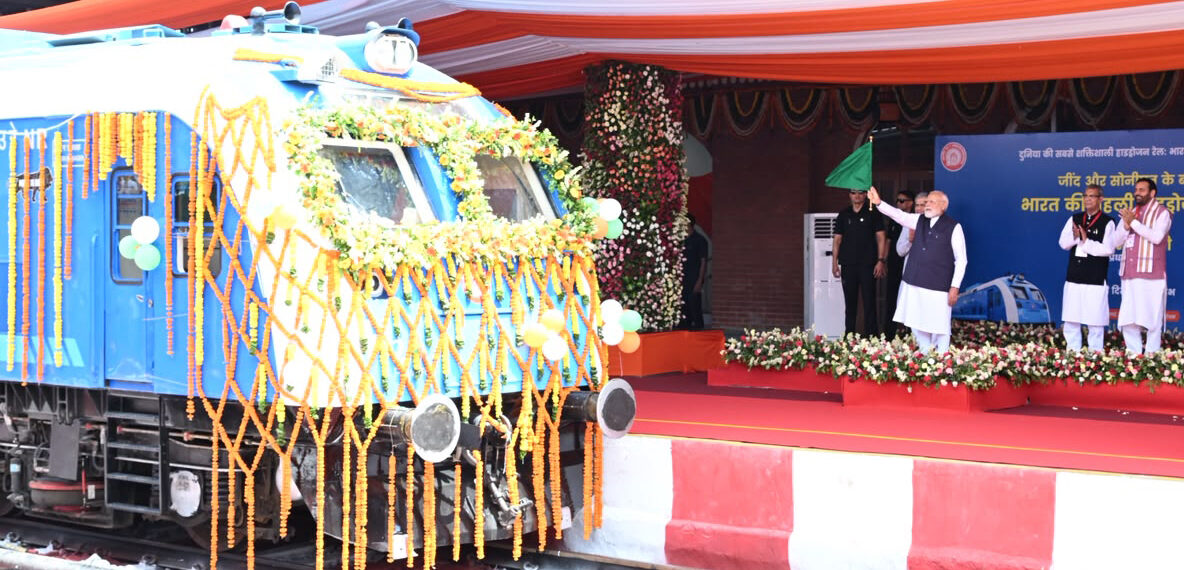
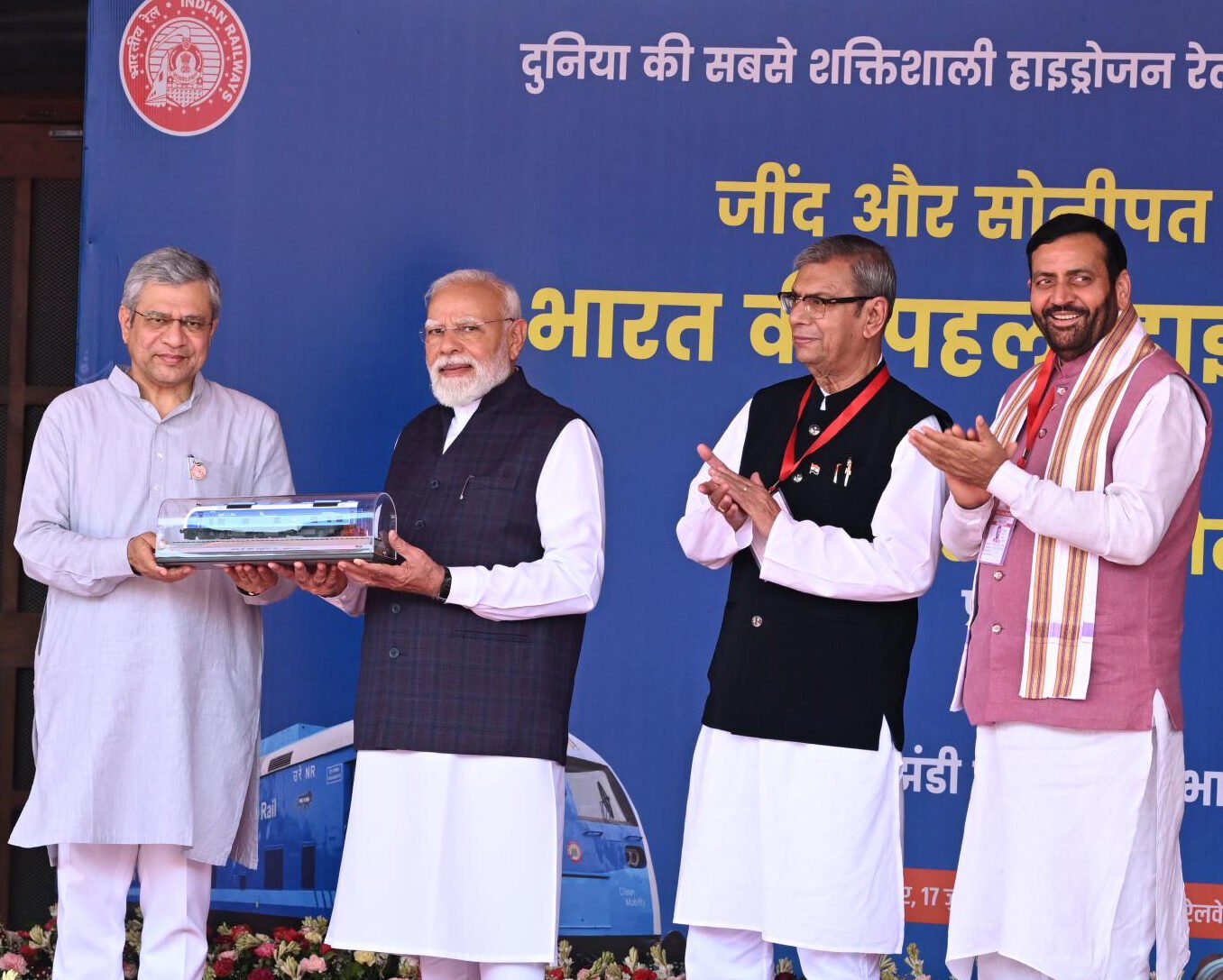
Dressed in tricolour bunting, floral decorations and welcoming banners, the redeveloped Jind Railway Station wore a festive look on Friday as Prime Minister Narendra Modi flagged off India’s first hydrogen-powered passenger train, ushering Indian Railways into the era of zero-emission mobility.
Railway Minister Ashwini Vaishnaw accompanied the Prime Minister during the inaugural ceremony, which also marked the dedication of the modernised station under the Amrit Bharat Station Scheme.
Traditional dhol and nagada performances welcomed the Prime Minister, while hundreds of schoolchildren, specially invited as guests for the inaugural run, added colour and excitement to the historic occasion. Waving the Tricolour and chanting patriotic slogans, they became among the first passengers to experience India’s hydrogen-powered rail technology.
Addressing the gathering, Prime Minister Modi described the launch as a defining moment in the evolution of Indian Railways. “The 19th century belonged to steam engines, the 20th century was driven by electric traction and the 21st century will belong to hydrogen-powered mobility. Today, Indian Railways has taken a giant leap into this future technology,” he said.
The Prime Minister noted that hydrogen passenger train technology became operational globally only seven to eight years ago and is currently available in only a handful of countries. “India has not only joined this exclusive league but has introduced the world’s most powerful hydrogen-powered passenger train,” he said, adding that the indigenously developed train is powered by a 3,200-horsepower propulsion system and comprises 10 coaches, whereas similar hydrogen trains in many countries generally operate with only three or four coaches.
Calling it a major success of the Make in India initiative, Modi said the advanced train had been designed by Indian engineers and built by domestic manufacturers. He added that hydrogen-powered rail systems would require specialised infrastructure, production facilities and refuelling networks, creating new employment opportunities while strengthening India’s green hydrogen ecosystem.
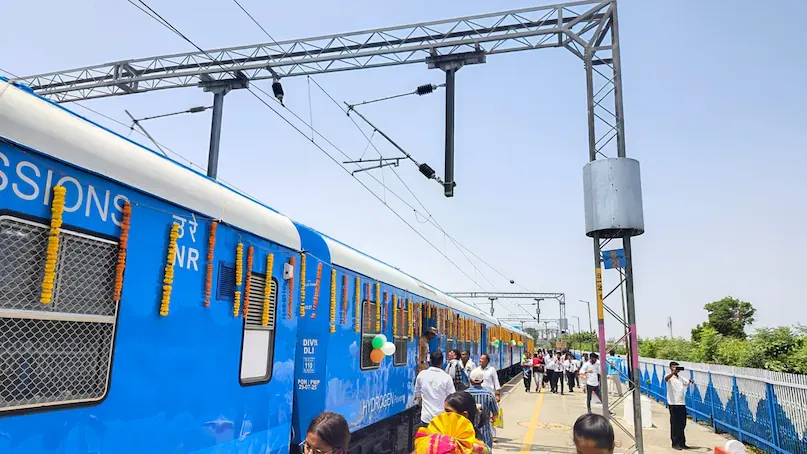
Unlike conventional diesel locomotives, the hydrogen-powered train does not burn fuel. Compressed hydrogen stored in high-pressure tanks is supplied to fuel-cell stacks, where it reacts with oxygen from the atmosphere to generate electricity through an electrochemical process. The electricity powers traction motors connected to the wheels, while onboard lithium-ion batteries store surplus energy and provide additional power during acceleration. During braking, regenerative technology recovers energy and recharges the batteries, improving efficiency. The only by-products of the process are water vapour and heat, making the train virtually free from direct carbon emissions and significantly quieter than conventional diesel trains.
Loco Pilot Chandrakan, who operated the inaugural service, said driving the train was a completely different experience. “It is a pollution-free train with almost zero noise and zero carbon emissions. A single hydrogen refill is sufficient for nearly two round trips, covering around 360 km. The hydrogen is produced from water at the hydrogen plant, and inside the fuel-cell system it reacts with oxygen from the air to generate electricity, which powers the train,” he said.
The hydrogen-powered service will initially operate on the nearly 90-km Jind-Sonipat section of Northern Railway as a pilot project. The train is supported by a dedicated hydrogen production, storage and refuelling facility at Jind and is equipped with hydrogen leak-detection sensors, automatic isolation systems and fire-suppression mechanisms to ensure safe operations.
As the train quietly rolled out of Jind amid cheers from schoolchildren and railway staff, the inaugural journey symbolised much more than the launch of a new service—it marked India’s first decisive step towards a cleaner, greener and technologically advanced railway future.